
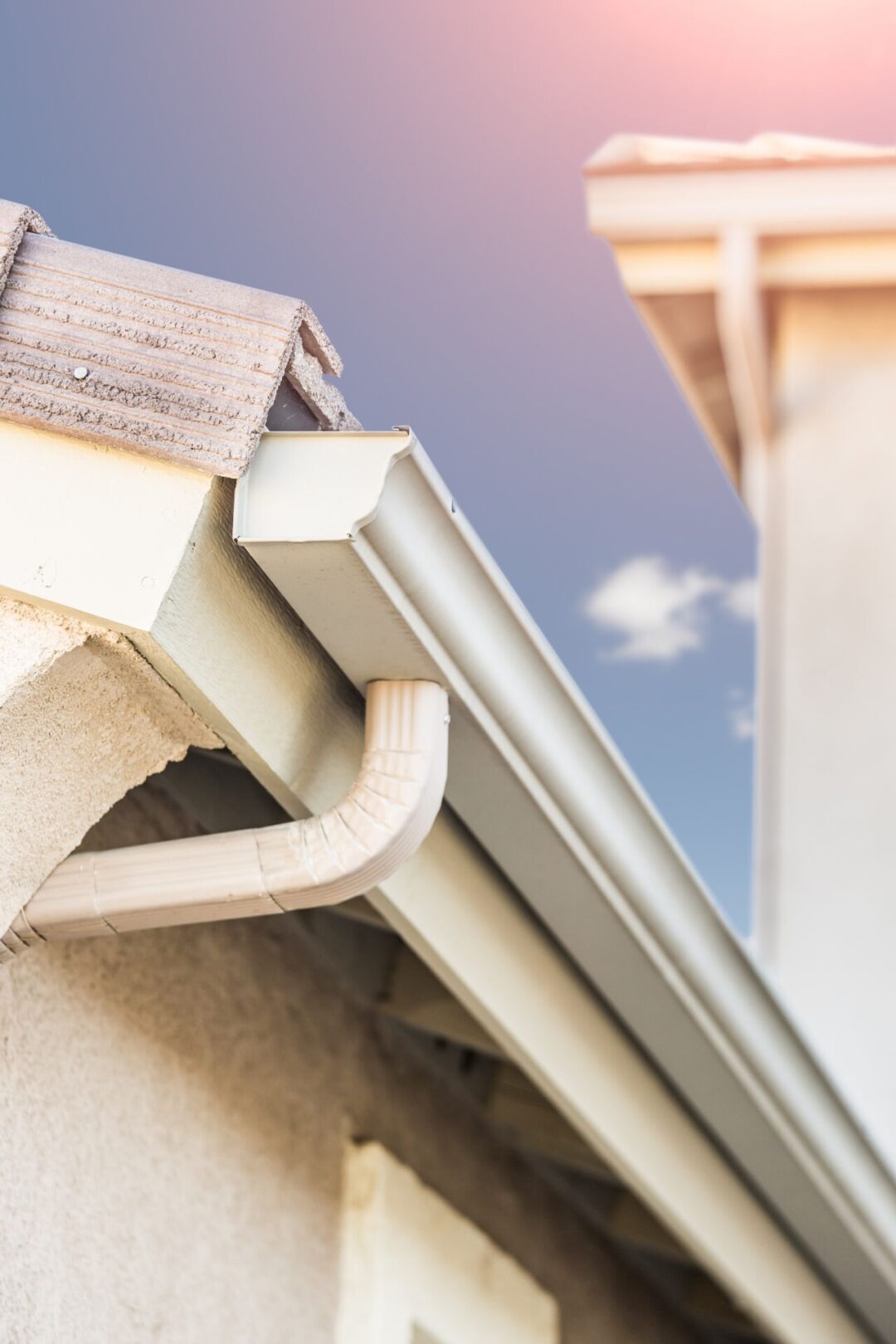
A well-designed gutter system collects and diverts rainwater away from your roof and foundation, preventing erosion, basement flooding, and siding damage. This guide explains how gutter systems work, compares common styles and materials, outlines installation cost drivers, and gives practical maintenance and sizing guidance tailored for homeowners. Many property owners struggle with choosing between aesthetic fit, durability, and lifecycle cost—this article breaks those trade-offs into clear choices and actionable steps. You will learn how gutter types (K-style, half-round, seamless, sectional) match different homes, which materials perform best in cold, snowy climates, and when professional installation pays for itself. The following sections cover: the different gutter styles; material pros and cons with a lifespans; cost ranges and factors that influence pricing; how gutters protect foundations and landscapes; maintenance schedules and gutter guard trade-offs; and how to request a free estimate and expert service from Precision Roofing and Remodeling in Hudson, NY. Throughout, this guide uses practical examples, checklists, and comparison to help you choose gutters that protect your home and reduce long-term repair costs.
Gutter systems come in several distinct styles that influence water capacity, appearance, and installation complexity, and selecting the right style balances function with curb appeal. The main types — K-style, half-round, seamless, sectional, and box gutters — differ in profile shape, joint frequency, and how they integrate with fascia and rooflines. Choosing the right style depends on roof pitch, expected rainfall and snow load, architectural style, and whether you prefer lower maintenance or a period-accurate look. The next sections define each style, explain where they perform best, and offer scenario-based recommendations that link style selection to roof type and local climate.
K-style gutters are the most common residential profile, named for their decorative front face that resembles crown molding; they offer good water capacity and a discreet look that complements modern siding. Half-round gutters form a semicircular channel and excel on historic or craftsman-style homes where the rounded profile is part of the architectural character; their smooth interior can make debris removal easier in some situations. Seamless gutters are fabricated to match an individual home’s run length, minimizing joints and therefore reducing typical leak points; they generally require professional measurement and on-site forming. Sectional gutters are sold in fixed segments that the homeowner or installer assembles on-site; they are budget-friendly and accessible for DIYers but have more seams, which increases leak risk over time and requires more seam maintenance.
These differences in profile and joint frequency affect maintenance needs and long-term performance, and understanding that trade-off leads to a focused comparison between seamless and sectional approaches.
Seamless gutters reduce leak risk by eliminating most joints, making them a preferred choice where longevity and lower maintenance are priorities; the mechanism is straightforward — fewer seams equals fewer failure points. Sectional gutters have the advantage of lower upfront cost and easier DIY installation because segments are standardized and available at retail, but the downside is that each joint is a potential leak and requires sealant and periodic inspection. From a lifecycle-cost perspective, seamless gutters often offer better value on multi-story homes or roofs with complex runs because the reduced maintenance and fewer repairs offset higher initial labor and fabrication. When budget is the primary constraint and runs are short or simple, sectional gutters can be an acceptable compromise; otherwise, seamless systems are recommended for long-term performance and reduced leak risk.
Moving from styles to materials clarifies how profile choice combines with substrate to determine durability and maintenance.
Gutter material strongly influences lifespan, maintenance, corrosion resistance, appearance, and per-linear-foot cost, so material selection should reflect local climate, budget, and aesthetic priorities. Typical residential materials include aluminum, vinyl, steel (galvanized or stainless), copper, and zinc — each presents a different balance of cost, durability, and visual character. The next subsections discuss the pros and cons of each material and how Hudson, NY’s climate affects material suitability.
Aluminum gutters are lightweight, resist rust, and offer a broad range of colors, with typical lifespans around 20–30 years; they balance cost and durability, making them a common residential choice. Vinyl gutters are inexpensive and easy to install for DIY projects, but they can become brittle in cold temperatures and are generally less durable, with lifespans often under 20 years. Steel gutters (galvanized) provide strength and rigidity, performing well under heavy snow when heavier gauge steel is used; however, they are susceptible to corrosion over time if protective coatings fail. Copper and zinc are premium materials offering 40–50+ years of service and develop attractive patinas that many homeowners appreciate; their high cost is offset by minimal maintenance and exceptional longevity.
Understanding these material trade-offs helps narrow choices based on budget and desired lifecycle, and the next subsection applies those considerations specifically to Hudson, NY’s climate.
Hudson, NY experiences freeze-thaw cycles, seasonal snow loads, and occasional heavy rainfall, so choose materials that withstand thermal expansion, ice, and roof-drain surges. For heavy snow and ice, heavier-gauge aluminum or steel profiles and larger capacities (deeper K-style or box gutters) reduce risk of deformation and ice dam-induced stress. Vinyl’s thermal expansion and tendency to become brittle at low temperatures make it less ideal in freeze-prone locations; premium metals like copper or zinc handle cold climates well, though they carry higher initial costs. Considering salt exposure and local runoff conditions will also guide material choice: materials with good corrosion resistance and strong attachment systems are preferable where de-icing salt may contact downspouts or splash blocks.
Those material and climate choices influence project pricing and the question of whether to install gutters professionally or as a DIY project, which is addressed in the next section.
Deciding between DIY and professional installation requires weighing safety, complexity, warranty coverage, and long-term value. Choose professional installation for multi-story homes, steep roofs, complex rooflines, or when seamless custom fabrication is desired; professionals manage height-related safety, ensure proper slope and fastener spacing, and typically provide warranty coverage which reduces lifecycle risk. DIY may be suitable for single-story homes with simple runs and sectional gutters, but it increases personal safety risk and may void manufacturer or installer warranties if not done to standard. Professional benefits to consider include emergency next-day replacements and comprehensive warranties offered by some providers, which can mitigate downtime after storm damage; these service-level advantages often tip the balance toward hiring experienced installers for higher-risk or higher-value projects.
If you decide to hire professionals, the next section shows how Precision Roofing and Remodeling’s free estimates and service UVPs can support your decision-making without replacing the educational guidance above.
Gutters protect foundations, basements, siding, and landscaping by channeling roof runoff away from the building envelope and managing the volume and velocity of discharged water. The mechanism is simple: a properly pitched gutter collects water at the roof edge, the downspout conveys it away from the foundation, and splash blocks or extensions disperse flow to prevent concentrated erosion. Failures such as improper slope, insufficient hangers, or undersized downspouts create ponding, overflowing, and concentrated discharge that can increase hydrostatic pressure on foundations and cause soil erosion near footings. The following H3 sections explain the protection mechanics in detail and show why correct installation practices are essential to realize those benefits.
Gutters reduce hydrostatic pressure against basement walls by diverting runoff from the roof to safe discharge areas, which reduces the likelihood of seepage and foundation cracks over time. Proper downspout placement and routing direct water away from walkways, planting beds, and soil slopes, protecting both hardscape and plantings from root-saturating flows and erosion. In practice, even modest spacing of downspouts and routing to a dry well or safe dispersal area reduces soil saturation that leads to foundation settlement and landscaping loss. Regular inspection of discharge points ensures they remain free-flowing and that splash blocks or extensions are positioned to move water well beyond the immediate foundation zone.
Professional installation ensures correct pitch, secure hanger spacing, and appropriate fasteners and sealants, reducing sagging, clogs at seams, and leak points that shorten system life. Installers evaluate roof geometry, expected runoff, and local snow/ice conditions to size gutters and downspouts appropriately, and they apply workmanship practices that lower future maintenance (for example, correct slope to downspouts and proper attachment to fascia or soffit). Mistakes such as over-reliance on adhesive sealants at seams, incorrect hanger spacing, or undersized downspouts often manifest as premature failure after heavy storms or freeze-thaw cycles. Hiring a professional also often brings warranty coverage and an accountable service relationship, which can reduce lifecycle cost through guaranteed repairs and documented workmanship standards.
Understanding installation quality leads into practical maintenance to preserve performance and reduce the need for premature replacement.
Routine maintenance keeps gutter systems effective and extends their service life by preventing clogs, corrosion, and localized damage from overflow. A seasonal inspection and cleaning routine addresses debris removal, seam and fastener checks, and downspout flushing to confirm unobstructed flow. Gutter guards can reduce cleaning frequency and interior clogging but vary in effectiveness by debris type, and they introduce trade-offs in initial cost and occasional maintenance access. The subsections below specify cleaning cadence and compare guard types so you can decide whether guards are a cost-effective addition for your situation.
As a general rule, inspect gutters at least twice a year — typically in spring and late fall — and increase frequency if large trees overhang the roof or after major storms; this cadence balances maintenance effort with protection in most climates. During each inspection, check for standing water, sagging runs, loose hangers, cracked end caps, and slow downspout discharge; also look for stains on siding that indicate overflow. Flushing downspouts with a hose verifies clear routing, while a visual check from the ground for misaligned hangers helps catch early signs of failure. Promptly addressing minor issues such as resealing a seam or tightening fasteners prevents more extensive repairs later and protects foundation and landscape investments.
Gutter guards reduce the frequency of manual cleaning by preventing large debris from entering the gutter channel, lowering the risk of clogs that lead to overflow and water intrusion. Different guard types — mesh, reverse-curve, foam, and brush inserts — offer varying balances of debris exclusion, water throughput, and cost; mesh guards are versatile for small debris, while reverse-curve designs prioritize large-volume flow but may require specific roof-edge geometry. While guards reduce routine cleaning, they are not maintenance-free: fine debris can still accumulate, and guards must be inspected periodically to ensure they remain secure and effective. For many homeowners, guards provide a favorable return on time saved, but evaluate their compatibility with your gutter profile and local vegetation before committing.
When evaluating quotes, a free on-site estimate helps translate material, system style, and roof complexity into a clear price and scope of work, while allowing you to confirm installer practices and warranty terms. Precision Roofing and Remodeling offers free estimates in Hudson, NY, where an on-site review is used to measure gutter runs, inspect fascia and roofline condition, and discuss material options and warranty coverage. During the estimate, expect a visual inspection, discussion of seamless versus sectional options, and clarification of what is included such as removal of old gutters, downspout routing, and any recommended fascia repairs. Receiving a written estimate with clear scope, timeline guidance, and warranty information helps compare bids objectively and reduces the chance of surprise charges during installation.
Precision Roofing and Remodeling highlights several homeowner-focused service attributes that support trust during selection: they provide free estimates, ensure the owner is onsite for every project, offer competitive pricing, and hold comprehensive warranties covering roofing, siding, and gutter installation. These service points aim to reduce homeowner risk by combining transparent pricing with owner-level oversight, which can result in clearer communication and consistent workmanship. Additional customer-focused offerings include next-day emergency replacements for urgent storm damage scenarios and special discounts for seniors, military, and first responders. Collectively, these value propositions — free estimates, owner onsite presence, warranties, emergency response, and discounts — help homeowners balance cost, speed, and assurance when selecting an installer.
25 Chestnut St
Cooperstown NY 13326
Mon - Sat 9am- 5pm
Sun Closed
Call us for a free estimate
607-760-8100